
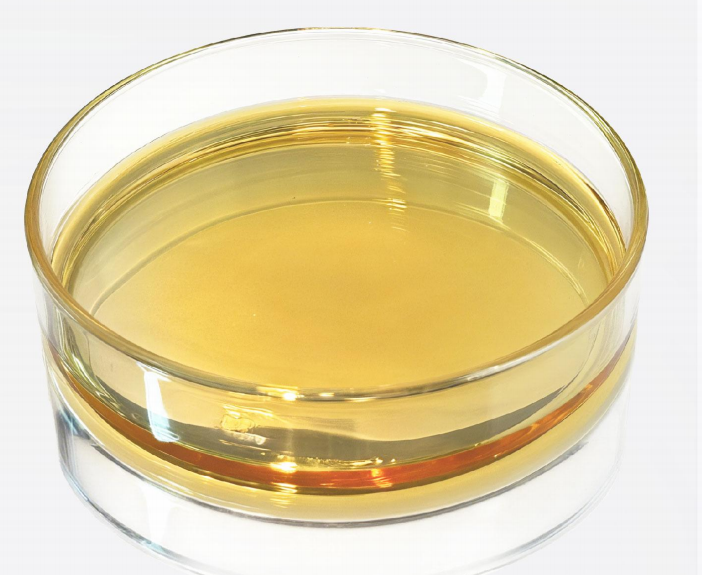
When a buyer asks us to recommend postbiotic ingredients for skincare, the first question is usually, “What is your recommended dosage?” In our lab, that is not the first question. We first need to know what was fermented, which microorganism was used, whether it is still viable, what is actually present in the delivered drum, and which data belong to that exact commercial grade.
Those questions matter because “fermented,” “probiotic,” “postbiotic,” “lysate,” and “ferment extract” are not interchangeable labels. They describe different materials and create different formulation, quality, and claim obligations. This page explains how our technical team qualifies ZLEY®COIXFERMEX, a water-soluble coix-derived ferment, before we recommend it for a postbiotic skincare project.
It is written for formulation, procurement, and regulatory teams evaluating postbiotic ingredients, not as a consumer trend roundup.
Start by naming what is actually in the drum
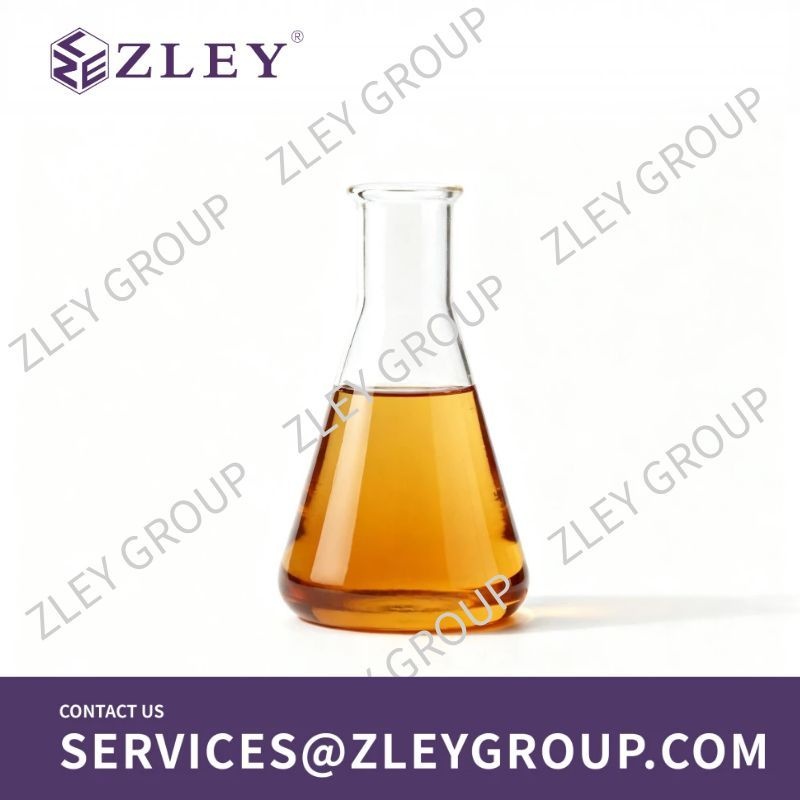
COIXFERMEX begins with Yokunin, also known as coix or Job’s tears, as the plant substrate. Lactococcus lactis is used for fermentation. The process is followed by high-temperature inactivation, so this is not a live-culture probiotic ingredient.
| Identity point | What ZLEY publishes | What procurement should confirm |
|---|---|---|
| Plant substrate | Yokunin/coix extract | Botanical identity, plant part, extraction description, origin, and the market-specific naming used in the ingredient declaration |
| Fermentation organism | Lactococcus lactis | Strain or traceable production-culture identity and the supplier’s safety review |
| Inactivation | High-temperature inactivation after fermentation | How inactivation is verified and which release test confirms the supplied grade is non-viable |
| Commercial mixture | Coix extract, Lactococcus Ferment Lysate, Lactococcus Ferment Extract, 1,2-Hexanediol, and water | Current signed INCI declaration, exact composition ranges where disclosure is required, preservative statement, and destination-market suitability |
| 物理的な形態 | Yellow-to-brown, water-soluble liquid; a small amount of precipitate may occur | Approved color, odor, pH, solids or marker range, microbial limits, and sediment/re-dispersion acceptance criteria |
Why we do not call this a probiotic
A probiotic is alive. COIXFERMEX is heat-inactivated after fermentation, so “contains live probiotics” would be inaccurate. The more relevant category is postbiotic, but that word also has a threshold. The ISAPP consensus statement defines a postbiotic as a preparation of inanimate microorganisms and/or their components that confers a health benefit on the host. It also calls for characterization of the starting microorganism, a described inactivation process, confirmation of inactivation, and evidence of benefit.
That definition is useful in supplier qualification because it stops “postbiotic” from becoming a decorative synonym for any fermentation by-product. A filtrate without microbial components, a purified fermentation metabolite, and a heat-inactivated microbial preparation may all be useful, but they are not automatically the same category.
その IFSCC skin microbiome guidance makes a similar practical point for cosmetics: product classification, claim substantiation, preservation, microbial quality, and the intended effect on the skin microbiome all need to be considered. For a buyer, the right question is not “Can we print postbiotic on the front panel?” It is “Which documents and finished-product data support the exact wording we plan to use?”
What the ZLEY 28-day result tells us
ZLEY reports a 28-day human-use test on a finished test product containing 6% COIXFERMEX. The published changes from baseline were:
| Measured endpoint | Reported change after 28 days | How we use the result in development |
|---|---|---|
| Stratum corneum moisture | +51.76% (P<0.001) | Supports screening in hydration-focused concepts |
| Transepidermal water loss | -20.88% (P<0.001) | Supports a barrier-care hypothesis that still needs finished-formula confirmation |
| Elasticity R2 | +4.82% (P<0.001) | Provides a reason to include elasticity in the product test plan |
| F4値 | -17.15% (P<0.001) | Provides a firming-related endpoint for technical review |
We do not turn those four percentages into a blanket raw-material promise. They came from a finished test product at one use level and one duration. Before a brand uses them in a claim file, we provide the available study summary or report and clarify the protocol, subject count, control, inclusion criteria, instruments, climate conditions, statistics, and formula. The buyer then decides whether its own finished formula requires a confirmatory study.
When I would put COIXFERMEX on the sample list
From a formulator’s perspective, this grade is worth screening when several of the following are true:
- The brief is built around hydration, barrier care, skin comfort, or a fermented botanical story.
- The formula is a toner, essence, serum, gel-cream, lotion, cream, or mask with a usable water phase.
- The product can accept a yellow-to-brown raw material and possible color contribution at the target dose.
- The brand wants a non-live ferment system rather than the preservation and viability burden of a live culture.
- The team can test the finished formula instead of relying only on a supplier presentation.
I would not make it the first recommendation for a crystal-clear, water-white serum; an anhydrous oil or balm; a formula with no tolerance for natural color or trace sediment; or a project whose only objective is to make an unqualified “balances the microbiome” claim. Those briefs need a different material or more evidence before a sample is useful.
The first bench trial we actually run
COIXFERMEX has a published recommended level of 1.0-19.0% as supplied. That range is broad, so it should not be copied directly into a formula brief. Our first screen is designed around the product target and the existing clinical reference, not around the top of the supplier range.
- Condition and inspect the sample. Bring it to room temperature, record color, odor, homogeneity, and visible settling, then re-disperse gently before weighing. Do not judge a cold, settled sample from the top layer alone.
- Make a true blank. Keep one batch of the original base without COIXFERMEX. The blank is needed to interpret color, odor, viscosity, pH drift, and preservation results.
- Start with 3% and 6%. The 6% batch connects the bench screen to ZLEY’s published human-test use level. A lower level shows whether the formula can meet its sensory and cost target with less material. Add 10% only when the brief justifies it.
- Add through the water phase or cool-down. Until the current project-specific process window is confirmed, we begin below 40 C under moderate sweep. This is a conservative development starting point, not a formal manufacturing limit.
- Avoid unnecessary high shear. Use enough mixing to distribute the liquid uniformly. Excessive homogenization can add air and heat without solving a compatibility problem.
- Read the batch after 24 and 48 hours. Measure pH and viscosity after the structure has recovered. Record color, odor, clarity, sediment, creaming, stringiness, and tack against the blank.
- Advance one level, not every level. Choose the lowest concentration that fits the technical brief, then move that batch into accelerated stability, preservation, compatibility, and claim testing.
A little precipitate is not automatically a failed lot
The published appearance specification allows a small amount of material at the bottom. That fact should be written into receiving and sampling procedures. A warehouse may reject a conforming lot if the team expects a perfectly clear liquid, while a genuinely abnormal lot may pass if nobody has defined how much settling is acceptable.
For each incoming lot, we would photograph the unopened container, condition it at the specified temperature, mix it using the agreed method, and record whether the sediment re-disperses. If the amount, color, odor, or re-dispersion behavior differs from the approved reference, quarantine the lot and compare it with the COA before use. “Natural variation” is not a substitute for a numeric or visual acceptance standard.
What we watch during stability
| Check | Why it matters for this grade | Useful first screen |
|---|---|---|
| Color and odor | A botanical ferment can influence the base, especially as use level rises | Blank versus active batches under room temperature, 4 C, 40 C, and light exposure |
| pH | Ferment-derived acids and the carrier can shift the platform | Initial, 24-hour, 7-day, and scheduled stability readings |
| Viscosity and clarity | Electrolytes and dissolved/colloidal components may interact with the rheology system | Compare recovery after 24 and 48 hours and after thermal cycling |
| Sediment or flocculation | The raw material permits slight settling, but the finished product still needs an agreed appearance | Centrifuge, freeze-thaw, upright/inverted storage, and package observation |
| Microbial quality | This is a water-containing, biologically derived commercial mixture | Raw-material limits plus finished-product preservative efficacy testing |
| Package interaction | Color, odor, headspace, and dispensing can change the user experience | Test the intended pump, dropper, sachet, or jar rather than glass only |
If the marketing claim depends on hydration, TEWL, elasticity, or firming, the stability plan should protect the test formula that will be used for substantiation. A clinical result on one version cannot simply be transferred to a materially different base, dose, preservative system, or packaging format.
The qualification pack we expect before a production order
A polished brochure is useful for screening, but it does not release a raw material. For a production project, we align the sample, specification, COA, and shipment to the same commercial grade and clarify these items:
- Current signed TDS, SDS, complete ingredient declaration, and representative batch COA
- Botanical identity, plant part, origin, extraction description, and traceability
- Fermentation organism identity, process summary, inactivation method, and non-viability confirmation
- Appearance, odor, pH, density, solids or relevant marker ranges, and re-dispersion criteria
- Microbial limits, preservative composition or preservation statement, and water activity where relevant
- Heavy metals, residual solvents or process contaminants, allergens, GMO, animal-origin, and BSE/TSE statements as required
- Supported shelf life, storage temperature, light protection, freeze-thaw guidance, and commercial packaging
- Human-test report or summary with protocol details and permission for the intended claim use
- Market-specific inventory or regulatory information for the destination country
- Change-control expectations for organism, substrate, process, specification, packaging, or manufacturing site
This is where ZLEY’s supplier role needs to be visible. Our application team can help connect the raw-material document set to the buyer’s formula and test plan; the broader workflow is described in our formulation support library. Information about our manufacturing and technical facilities is available on the ZLEY Group profile.
How we compare two supplier quotations
Price per kilogram is not enough. The practical formula cost is:
Then we compare what that cost buys: a defined substrate and culture, controlled inactivation, batch release markers, usable human data, preservation information, consistent color and odor, and technical support when the base changes. A cheaper drum that requires repeated reformulation or cannot support the intended claim is not the lower-cost ingredient.
What published Lactococcus research can and cannot tell us
A randomized, vehicle-controlled study evaluated a topical Lactococcus lactis emulsion in reconstructed human epidermis and 20 healthy women. The human arm used twice-daily application for 30 days and reported an 18% reduction in TEWL, together with changes in hydration and surface pH. The study is useful because it shows why Lactococcus-derived systems are investigated for barrier care. The details are available in the PubMed record.
It is not proof for COIXFERMEX. The strain, preparation, vehicle, dose, manufacturing process, and test design were different. We use third-party research to shape questions and endpoints; we use ZLEY grade-specific and buyer finished-formula data to support the commercial decision.
ZLEY does not treat fermentation as a magic adjective. The substrate, organism, inactivation, composition, dose, and finished formula all have to stay connected to the claim.
Claim language we review before launch
| Proposed wording | Our technical response |
|---|---|
| “Contains live probiotics” | Do not use for a heat-inactivated material. |
| “Made with a fermented coix and Lactococcus-derived cosmetic ingredient” | Potentially factual when it matches the approved ingredient declaration and supply documents. |
| “Postbiotic” | Review against the adopted definition, product characterization, non-viability evidence, human-benefit data, and local market expectations. |
| “Supports hydration” or “helps reduce moisture loss” | Build the claim around the tested finished formula, endpoint, duration, and target population. |
| “Balances the skin microbiome” | Do not infer this from the word ferment. It requires an appropriate microbiome study and a defined meaning for “balance.” |
| “Treats eczema, acne, or infection” | These are disease-related claims and are outside ordinary cosmetic positioning. The FDA cosmetics claims guidance illustrates the cosmetic/drug boundary in the United States. |
Our practical decision
COIXFERMEX is a sensible sample when the project needs a water-compatible, non-live fermented botanical ingredient for hydration, barrier-care, or firming exploration and can accommodate its natural color. Our preferred first screen is a blank plus 3% and 6% batches, followed by 24- and 48-hour readings and a stability plan tied to the actual claim.
We would pause the recommendation when the brief requires a water-white appearance, an anhydrous format, a live probiotic, or a microbiome claim without a study plan. In those cases, forcing the sample into the formula wastes time. For a different ferment platform, buyers can also review ZLEY PF101-OATFERM; for a ready-to-use microecology-care system, see our micellar system application note. These are different grades and should be qualified separately.
Questions buyers usually ask us
Is 6% the required use level?
No. Six percent is the level used in ZLEY’s published 28-day finished-product test. The commercial grade has a broader published range, but the correct level depends on formula compatibility, sensory target, claim plan, and cost. We normally screen a lower level alongside 6%.
Can the ingredient go into a clear toner?
It is water-soluble, but water-soluble does not guarantee water-white clarity. The material is yellow to brown and may contain slight settling. Test the actual dose in the intended base before approving color or transparency.
Does heat inactivation make preservation unnecessary?
No. Non-viable production organisms do not make a water-containing raw material or finished cosmetic self-preserving. Review the raw-material microbial limits and preservation system, then run preservative efficacy testing on the finished product.
Can a brand use the supplier’s human data directly?
Only after reviewing the full protocol, formula relationship, permitted claim use, target market, and whether the brand’s finished product is sufficiently comparable. When the claim is important, a confirmatory finished-product study is the safer route.