
The rise of clean label beauty reflects a deeper cultural shift toward authenticity, transparency, and ingredient integrity. As consumers move away from synthetic additives, brands are being challenged to reformulate without compromising performance or shelf life. This growing demand for natural preservation systems is accelerating a new phase of innovation—one that blends biology, chemistry, and sustainability in equal measure.
Why Clean Label Preservatives Are Gaining Market Trust
Consumers are now reading ingredient labels with a level of attention once reserved for nutrition facts. In markets like the US and Europe, terms such as clean, natural, and transparent have moved beyond marketing buzzwords—they’ve become basic expectations. Traditional preservatives like parabens, phenoxyethanol, and formaldehyde donors, while scientifically validated, are increasingly burdened by perception challenges fueled by outdated narratives and misinformation.
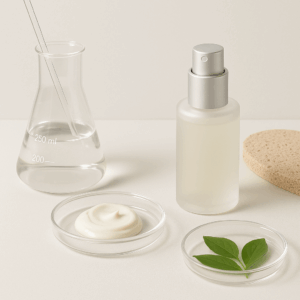
This has opened the door for a new generation of gentler, plant-inspired preservation systems — ingredients that protect formulations effectively while aligning with consumer trust. Retailers have amplified this movement through “no-list” policies and clean beauty frameworks. Sephora’s Clean + Planet Positive and Credo’s Clean Standard have reshaped supply chains, pushing both indie and established brands toward naturally derived, transparent alternatives simply to stay shelf-eligible.
The impact is unmistakable: clean label preservatives are now one of the fastest-growing categories in cosmetic formulation, with double-digit expansion forecast through 2027. Yet, market confidence isn’t earned by a “natural” label alone. It comes from performance transparency and credible validation.
Ingredient partners that can provide complete safety dossiers, robust challenge test data, and biodegradability evidence are setting a new benchmark for trust. At ZLEY Group, our approach mirrors this evolution — combining rigorous global sourcing integrity with science-backed innovation to advance the next generation of natural preservation systems.
The Science Behind Natural Preservation Systems in Beauty

The transition to clean label preservatives is less about eliminating synthetics outright and more about reengineering preservation systems through synergy. Natural multifunctional ingredients—such as caprylyl glycol, glyceryl caprylate, and organic acids—are now used in combination to create self-preserving emulsions. These systems rely on multifactorial microbial control mechanisms, including pH management, reduced water activity, and natural antimicrobial activity of certain esters and essential oil fractions.
Biotech-derived actives are shaping the next layer of innovation. Fermentation technologies produce organic acids and peptides with natural preservative efficacy while maintaining eco-profile advantages. For example, the use of probiotic ferments and coconut-derived glycols has given rise to low-irritant, broad-spectrum options suitable for sensitive skin formulations. The same research that refines these ingredients is also contributing to improved sensory profiles, enabling brands to formulate products that feel lighter, cleaner, and more stable over time.
Consumer demand has also elevated the role of preservation boosters—compounds like 1,2-hexanediol or ethylhexylglycerin—which, when paired with natural acids or botanical extracts, create synergistic defense systems. These solutions meet both microbial efficacy and “free-from” marketplace requirements. Clean label preservatives are evolving beyond static ingredients; they now form part of a holistic formulation strategy, balancing safety, functionality, and storytelling.
Regulatory Landscape: Evolving Definitions of Safety
Regulatory agencies are adapting to the rapid evolution of clean formulation. In the European Union, the latest Cosmetic Regulation (EC) No. 1223/2009 updates and SCCS opinions are encouraging data-driven preservation strategies rather than blanket ingredient bans. Annex V revisions highlight the need for validated stability and challenge testing to justify reduced preservative levels.
In the United States, while the FDA does not pre-approve cosmetic preservatives, increased transparency initiatives—such as the Modernization of Cosmetics Regulation Act (MoCRA, 2023)—require clearer documentation of ingredient safety. Across Asia-Pacific, especially in South Korea and Japan, regulatory frameworks are converging around microbiome safety and natural origin traceability, setting new standards for global compliance.
For suppliers and formulators, these shifts underscore one message: “clean” is no longer a marketing term but a regulatory responsibility.
Market Landscape: A Shift Backed by Data
According to Euromonitor and Mintel data, global demand for clean-label preservatives has grown by nearly 40% since 2021, driven by indie and mid-sized brands reformulating existing lines to meet retailer compliance standards. Europe remains the largest market, but Asia-Pacific is catching up fast, with formulators in South Korea and Japan pioneering microbiome-friendly preservation systems.
Ingredient suppliers are also reporting increased R&D investment in fermentation-based preservation—now accounting for nearly one-third of new launches in the category. These metrics reflect a clear reality: clean preservation has evolved from niche trend to long-term innovation strategy shaping every stage of product development.
| Year | Global Natural Preservatives Market (USD Billion) | Growth Rate | Key Segment Drivers |
|---|---|---|---|
| 2023 | 1.15 | 9.8% | Skincare reformulations, botanical sourcing |
| 2024 | 1.28 | 11.5% | Fermentation-based ingredients, microbiome-friendly products |
| 2025 (Forecast) | 1.46 | 13.2% | Regulatory harmonization, biotech scalability |
How Consumer Transparency Demands Reshape Formulation Strategy
Transparency has become both a moral and commercial responsibility. As digital-savvy consumers dissect ingredient lists through mobile scanning apps and social media analysts, brands are rethinking not just what they use but how they communicate it. Ingredient traceability now extends from field to formulation, requiring suppliers to quantify sustainability metrics such as carbon footprint, sourcing origin, and lifecycle impact.
Formulators are prioritizing “label literacy”—choosing ingredients with INCI names that are recognizable and intuitively clean. This strategy enhances perceived trust and simplifies regulatory compliance across regions. A preservative blend using natural glycols and lactates, for instance, reads far more favorably to consumers than a traditional parabens list, even if both meet strict safety limits. It’s also a matter of branding: a transparent formula story can strengthen product identity and justify premium pricing in an increasingly crowded market.
This evolution is also changing supplier relationships. Procurement managers now collaborate closely with ingredient manufacturers to co-develop systems that meet specific performance, efficacy, and marketing claims. ZLEY Group’s technical support teams, for example, often assist brands in optimizing clean label preservation efficiency without compromising formulation stability—illustrating how transparency-driven partnerships are becoming standard across the global cosmetics value chain.
Technical Challenges in Reformulation
Reformulating with natural preservatives is rarely a one-to-one substitution. pH sensitivity, odor masking, and system compatibility often require a full reevaluation of emulsifiers and stabilizers. Many natural acids show reduced activity at neutral pH, while botanical actives can interact with surfactants or destabilize emulsions over time.
Successful clean label preservation depends on a systems-based approach—optimizing water activity, chelating agents, and emulsifier blends to achieve broad-spectrum efficacy. This shift has turned preservation into a formulation design discipline rather than a simple additive choice.
Future Outlook: Sustainability and the Next Chapter of Clean Preservation
The next stage of clean label preservatives will be defined by sustainability, science, and shared responsibility. Regulatory updates — particularly in the European Union — are encouraging brands to use preservatives more efficiently through validated stability data and smarter system design. Similar movements are beginning to surface across North America and Asia-Pacific, signaling a global shift toward streamlined, low-impact preservation models.
This transition is fueling a wave of creativity. Circular sourcing methods — from upcycled plant extracts to bio-fermented organic acids — are emerging as powerful ways to balance antimicrobial performance with environmental care. Instead of reacting to “clean” as a label, formulators are now building sustainability directly into product design. Biodegradability, renewable carbon content, and aquatic safety have become essential benchmarks for responsible R&D.
The fusion of green chemistry and synthetic biology is opening the door to self-preserving systems — intelligent formulations that maintain stability with fewer ingredients and minimal ecological footprint. Early adopters of these technologies aren’t just keeping up with regulation; they’re leading with authenticity, proving that sustainability can be both scientific and sensorial.
Collaboration will continue to shape this evolution. Unified testing methods and clear definitions of what qualifies as a “natural preservative” will help the industry align on trust and transparency. As these frameworks take root, clean label preservation will move beyond a marketing claim to become a scientifically standardized foundation of modern formulation.
Clean label preservatives are no longer a niche experiment — they represent a rethinking of how beauty products are created, validated, and valued. The future of preservation is one where integrity and innovation work hand in hand.
If you’d like to explore next-generation preservation ingredients or discuss formulation guidance, please fill out the form below to contact our team — we’d be happy to help you design cleaner, smarter, and more sustainable solutions.