

“Can salicylic acid be used with retinol?” Although this is a common question, discussions about it are often oversimplified and fail to adequately explain how the skin actually reacts to these two ingredients.
Most answers online fall into rigid rules—never use them together or combine them for faster results. From a cosmetic raw material expert’s perspective, both approaches miss the real issue.
The key is not whether salicylic acid and retinol can coexist, but how their mechanisms interact, how exposure accumulates, and how formulation design controls skin response.
Why This Combination Is So Often Misunderstood
Salicylic acid and retinol are commonly discussed together because both are associated with acne management and skin renewal. However, grouping them by outcome rather than mechanism of action leads to confusion.
Although both ingredients influence turnover, they act through different biological pathways. When irritation or breakouts occur, the reaction is frequently attributed to “ingredient incompatibility,” when in reality it is more accurately explained by cumulative stress on the skin barrier.
What Salicylic Acid Does at the Ingredient Level

Salicylic acid is a β-hydroxy acid (BHA) with lipid solubility, which allows it to interact effectively with sebum-rich follicles.
From an ingredient science standpoint, salicylic acid:
- Reduces cohesion between corneocytes
- Promotes controlled desquamation
- Helps clear microcomedones
- Supports a less obstructed follicular environment
Clinical literature consistently describes salicylic acid as comedolytic rather than acne-inducing, with reviews such as salicylic acid in acne treatment explaining how it helps normalize follicular keratinization instead of creating new lesions.
This distinction matters because salicylic acid’s activity is localized and conditional. It primarily acts where excess keratin and sebum are already present, rather than globally accelerating turnover across all skin layers.
What Retinol Does—and Why It Feels More Aggressive
Retinol functions through a fundamentally different mechanism.
As a vitamin A derivative, retinol:
- Increases epidermal cell turnover
- Modulates keratinocyte differentiation
- Influences gene expression after metabolic conversion
- Supports long-term dermal remodeling
Unlike salicylic acid, retinol does not act mainly through exfoliation. Its effects occur at the cellular signaling level, which explains both its broad benefits and its higher irritation potential during early use.
Because retinol affects a wide population of skin cells, it places a greater demand on barrier repair and recovery.
Why “Don’t Use Them Together” Became Common Advice
The widespread warning against combining salicylic acid and retinol did not originate from chemical incompatibility. Instead, it emerged from observed irritation patterns.
Both ingredients:
- Increase turnover
- Reduce stratum corneum cohesion
- Can compromise barrier integrity if exposure is excessive
When these effects overlap within the same time window, the skin may respond with erythema, dryness, or inflammatory lesions. These reactions are often described as acne flares, even though they are not driven by increased comedone formation.
Dermatological discussions around epidermal turnover and acne lesion visibility describe how increased turnover can temporarily change lesion appearance without indicating true acne worsening.
Can Salicylic Acid and Retinol Be Used Together? A Technical Answer
From a cosmetic raw material perspective, the answer is clear:
Yes, salicylic acid and retinol can be used together—but only when exposure is deliberately managed.
There is no evidence that salicylic acid chemically deactivates retinol on skin, nor that retinol negates salicylic acid’s function. Problems arise when timing, concentration, and formulation context are ignored.
Scenario 1: Using Both in the Same Routine
Applying salicylic acid and retinol in the same routine represents the highest irritation risk, particularly when:
- Both are present at effective concentrations
- The formulation lacks buffering or controlled release
- The skin barrier is already compromised
Layering them may overwhelm the skin’s recovery capacity, leading to inflammation-driven breakouts rather than improved acne outcomes. From an ingredient evaluation standpoint, this reflects tolerance limits, not incompatibility.
Scenario 2: Alternating Use (More Biologically Aligned)
A more skin-compatible strategy is temporal separation:
- Salicylic acid on certain days or in the morning
- Retinol on alternate evenings
This approach aligns better with how skin adapts to turnover-modulating ingredients. Discussions around retinoid irritation and skin adaptation emphasize gradual exposure and recovery cycles rather than aggressive stacking.
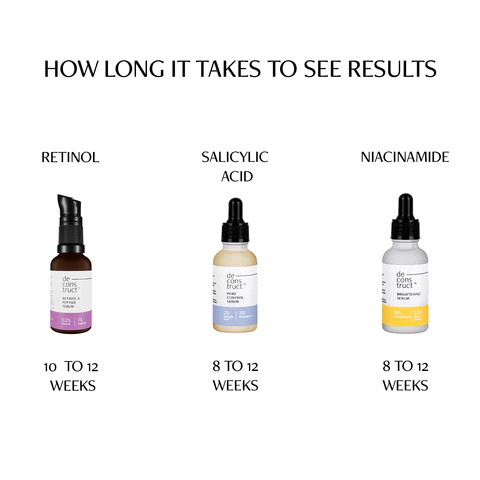
By separating exposure, each ingredient can perform its function without pushing the barrier beyond its adaptive capacity.
Scenario 3: Formulation Design Solves What Routines Cannot
In modern cosmetic science, compatibility is increasingly addressed through ingredient system design, not user discipline alone.
This includes:
- Encapsulated retinol systems
- Buffered or low free-acid salicylic formulations
- Controlled-release or derivative forms
Research into topical delivery systems shows that the same active ingredient can behave very differently depending on formulation architecture, as illustrated in discussions around formulation effects on salicylic acid penetration, where penetration depth and irritation potential vary despite identical actives.
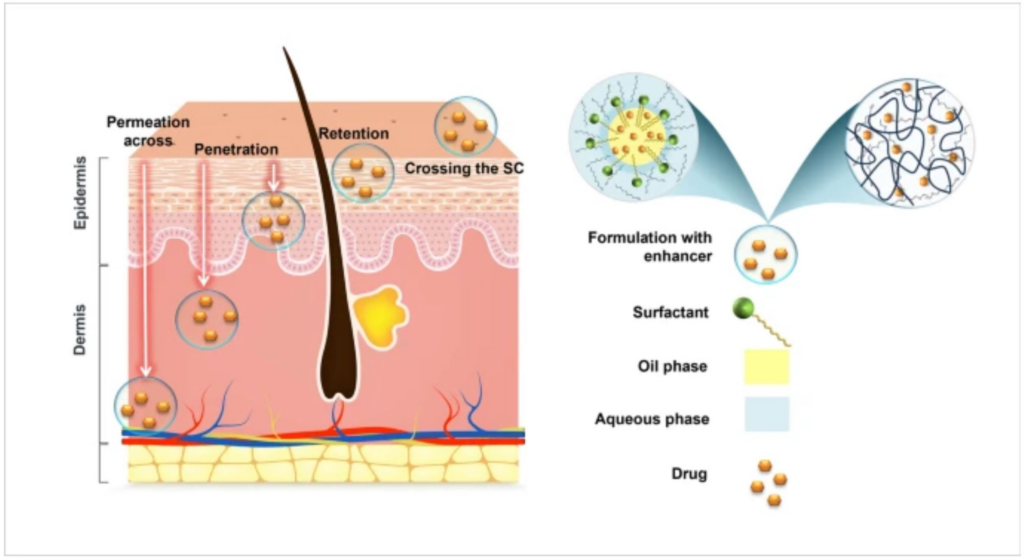
This is why evaluating compatibility based solely on ingredient names is scientifically incomplete.
Why Skin Type Alone Is a Poor Decision Framework
Many explanations rely heavily on skin type labels such as “oily,” “dry,” or “sensitive.” From an ingredient science standpoint, this approach is overly simplistic.
Skin condition is dynamic, influenced by barrier integrity, exfoliation history, environmental exposure, and concurrent activities. Even resilient skin can react poorly when turnover is pushed too aggressively.
A Persistent Myth: More Turnover Means Faster Results
One of the most common misconceptions is that combining exfoliants with retinoids accelerates improvement.
In reality:
- Excessive turnover delays barrier repair
- Inflammation can worsen the appearance of acne
- Retinoid benefits depend on consistency, not intensity
Ingredient science consistently supports measured, sustained exposure rather than aggressive stacking.
Final Takeaway
Can I use salicylic acid with retinol?
Yes—but only when timing, formulation design, and cumulative exposure are properly managed.
From a cosmetic raw material expert’s perspective:
- There is no inherent incompatibility between salicylic acid and retinol
- Most negative outcomes result from overlapping irritation, not chemistry
- Delivery systems and exposure strategy matter more than ingredient labels