

Five years ago, buyers mostly asked us about price.
Today, many of those same buyers start with a completely different question:
“Can you offer a sulfate-free alternative?”
That’s a significant shift.
Because in most cases, the brands asking this question are not dealing with a performance problem. Their existing formulations already clean well. The challenge is that consumer expectations have changed.
People are reading ingredient labels more carefully than ever. Sulfate-free claims have moved from a niche selling point to a mainstream expectation, particularly in premium shampoos, facial cleansers, and baby care products.
As a result, one ingredient continues showing up in formulation discussions around the world:
Sodium Cocoyl Isethionate, often shortened to SCI.
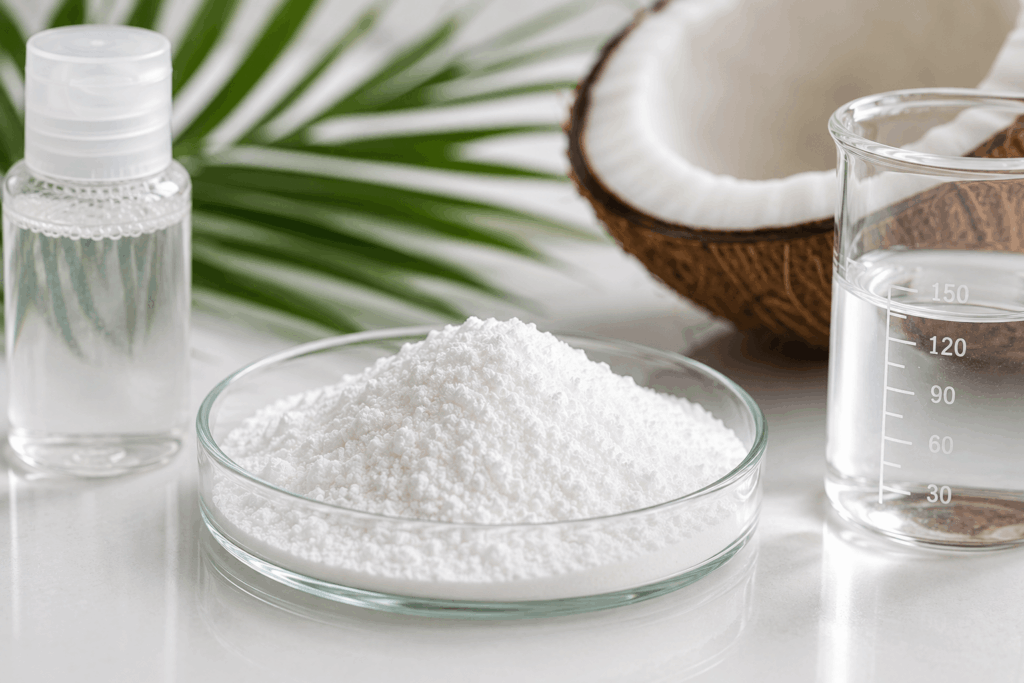
The Real Question Isn’t What SCI Is
If you’ve spent any time developing personal care products, you’ve probably heard of Sodium Cocoyl Isethionate before.
SCI isn’t a new ingredient.
Additional technical information about Sodium Cocoyl Isethionate can be found in the PubChem database.
In fact, formulators have been using it for decades.
What’s changed is the market around it.
Ten years ago, a shampoo could succeed simply by cleaning well and producing lots of foam.
Today, consumers expect more.
They want products that feel gentle on the scalp. They want formulas that support color-treated hair. They want ingredient lists that align with current beauty trends. And increasingly, they want sulfate-free alternatives.
That’s why the discussion around SCI has become so important.
The question brands are asking today isn’t:
“What is Sodium Cocoyl Isethionate?”
The real question is:
“Why are so many successful brands choosing it over traditional sulfates?”
The answer comes down to a combination of consumer perception, formulation performance, and market positioning.
Consumers Haven’t Stopped Wanting Foam
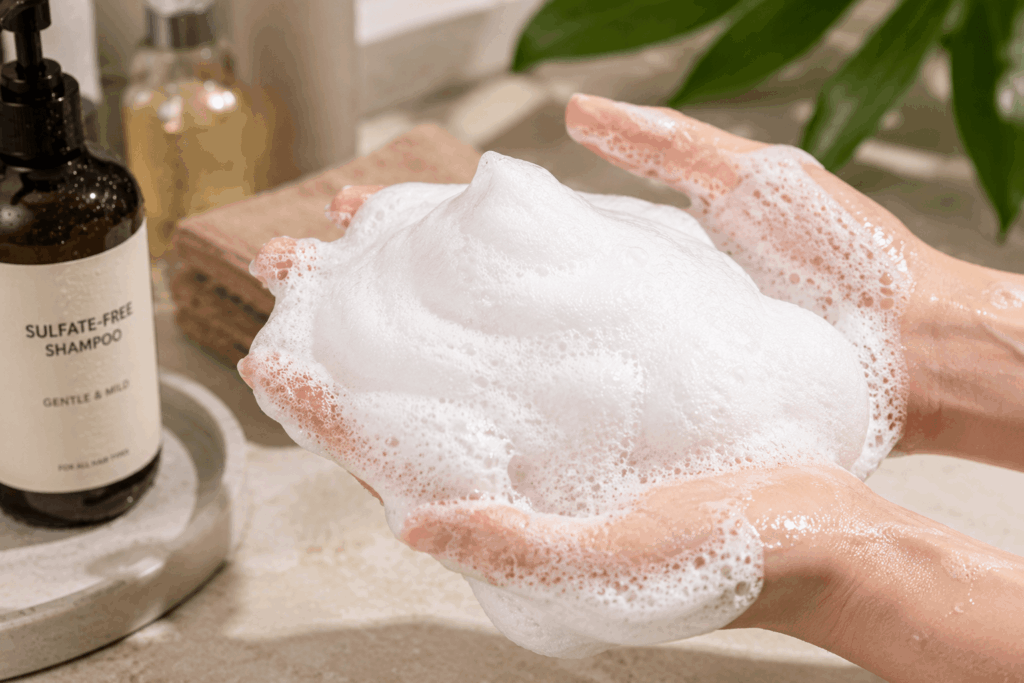
One mistake some brands make when reformulating away from sulfates is assuming consumers no longer care about foam.
They absolutely do.
Most consumers don’t evaluate a shampoo the same way a cosmetic chemist does.
They judge it based on experience.
How does it feel when applied?
Does it create a rich lather?
Does hair feel clean afterward?
Does the product feel luxurious?
A shampoo can be technically excellent, but if it produces weak foam, many consumers will assume it isn’t working properly.
This is where SCI has a major advantage.
Unlike many mild surfactants, Sodium Cocoyl Isethionate creates a dense, creamy foam that closely matches the sensory experience consumers expect from premium cleansing products.
That’s one reason it continues appearing in everything from luxury shampoo bars to high-end facial cleansers.
The Market Is Moving Toward Mild Cleansing
According to industry reports from Grand View Research and other market research organizations, demand for sulfate-free and sensitive-skin personal care products continues to grow globally.
For brands, this creates a challenge.
Consumers want products that feel gentler.
But they don’t want to sacrifice performance.
SCI sits in a unique position because it helps bridge that gap.
It delivers effective cleansing while supporting sulfate-free positioning, making it attractive for both formulators and marketing teams.
Why Premium Brands Are Paying More Attention To SCI
Let’s be honest.
SCI is usually not the cheapest surfactant available.
If cost is the only factor, there are plenty of lower-priced alternatives.
Yet many premium brands continue choosing it.
Why?
Because they aren’t comparing raw material cost alone.
They’re looking at the value it creates inside the finished product.
A sulfate-free shampoo can often command a higher retail price than a conventional sulfate-based product.
A premium shampoo bar can generate significantly higher margins than a traditional cleansing format.
A facial cleanser marketed for sensitive skin may appeal to a completely different customer segment.
When viewed from that perspective, the conversation shifts from:
“How much does SCI cost?”
to:
“What value does SCI create?”
And that’s a much more interesting discussion.
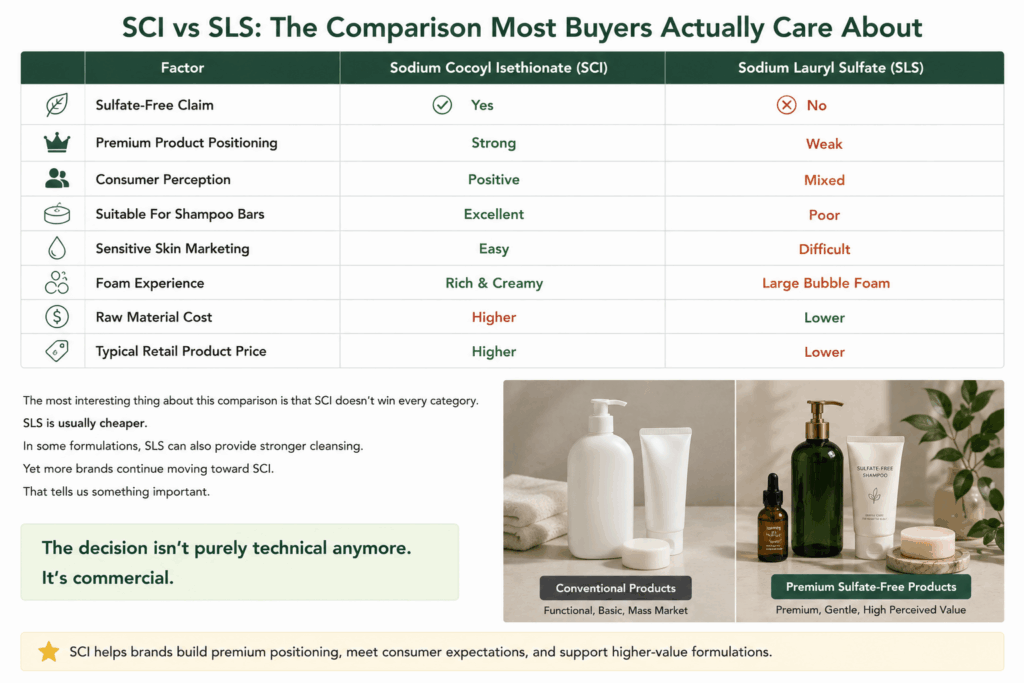
| Factor | Sodium Cocoyl Isethionate (SCI) | Sodium Lauryl Sulfate (SLS) |
|---|---|---|
| Sulfate-Free Claim | ✓ Yes | ✗ No |
| Premium Product Positioning | Strong | Weak |
| Consumer Perception | Positive | Mixed |
| Suitable For Shampoo Bars | Excellent | Poor |
| Sensitive Skin Marketing | Easy | Difficult |
| Foam Experience | Rich & Creamy | Large Bubble Foam |
| Raw Material Cost | Higher | Lower |
| Typical Retail Product Price | Higher | Lower |
The most interesting thing about this comparison is that SCI doesn’t win every category.
SLS is usually cheaper.
In some formulations, SLS can also provide stronger cleansing.
Yet more brands continue moving toward SCI.
That tells us something important.
The decision isn’t purely technical anymore.
It’s commercial.
Why Buyers Still Choose SCI Despite The Higher Cost
At first glance, SCI can appear expensive compared with traditional sulfates.
For procurement teams under pressure to control costs, that may seem like a disadvantage.
However, most successful personal care brands don’t evaluate ingredients based solely on purchase price.
They evaluate value creation.
Consider two shampoo formulas.
Formula A uses traditional sulfates.
Formula B uses SCI and supports sulfate-free marketing.
The second formula may cost more to manufacture.
But if consumers perceive it as a premium product, the retail price can often increase significantly.
In many cases, the margin gained at the retail level is greater than the additional ingredient cost.
That’s one reason premium brands rarely focus exclusively on raw material pricing.
They focus on market positioning.

Where SCI Creates The Biggest Advantage
In our experience, SCI delivers the greatest value in categories where consumer perception strongly influences purchasing decisions.
These include:
- Sulfate-free shampoos
- Premium shampoo bars
- Sensitive scalp products
- Facial cleansers
- Baby care products
- Clean beauty brands
These are also the categories where consumers are most likely to read ingredient lists before purchasing.
Why Consumers Are Willing To Pay More For Sulfate-Free Products
If SCI were simply another surfactant, brands wouldn’t be willing to pay a premium for it.
The reality is that consumers aren’t paying for the ingredient itself.
They’re paying for what the ingredient represents.
Over the last decade, sulfate-free has evolved from a niche marketing claim into a mainstream purchasing factor.
Consumers increasingly associate sulfate-free products with:
- Gentler cleansing
- Better scalp comfort
- Less dryness
- Premium formulations
- Higher-quality ingredients
Whether every sulfate-free product delivers those benefits is another conversation.
What’s important is that consumer perception has already shaped purchasing behavior.
According to market research from Grand View Research, the global sulfate-free shampoo market continues expanding as consumers seek milder alternatives to traditional cleansing products.
For brands, this creates a significant opportunity.
A product that successfully combines performance, sensory experience, and sulfate-free positioning often commands a higher retail price than a conventional formula.
That’s why many manufacturers no longer evaluate SCI purely as a raw material cost.
They evaluate it as part of a broader brand strategy.
In many cases, the discussion isn’t:
“How much does SCI cost?”
It’s:
“Can SCI help us create a product consumers are willing to pay more for?”
And increasingly, the answer appears to be yes.
Where SCI Delivers The Greatest Return For Brands
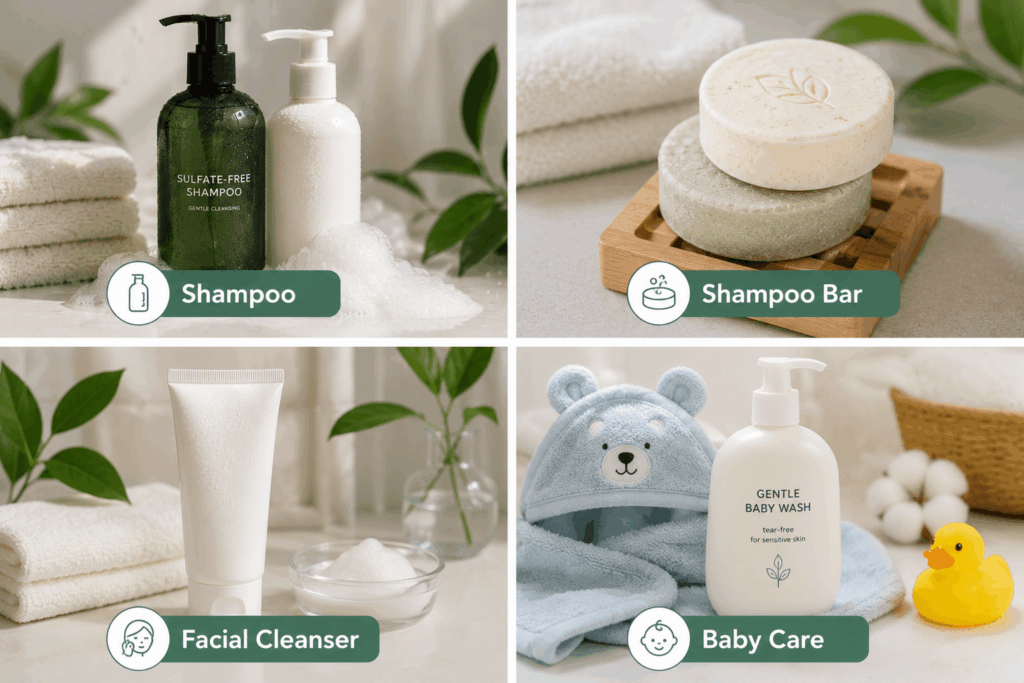
Not every personal care product benefits equally from SCI.
In some categories, the ingredient creates far more value than in others.
Understanding where SCI performs best can help brands make smarter formulation decisions.
Sulfate-Free Shampoos
This is arguably SCI’s strongest application.
Consumers shopping for sulfate-free shampoos are already willing to spend more than average.
Many of these consumers actively compare ingredient lists before purchasing.
As a result, SCI helps brands align product performance with customer expectations.
Premium Shampoo Bars
The rapid growth of shampoo bars has created new opportunities for SCI.
Unlike many traditional surfactants, SCI performs exceptionally well in solid formats.
It generates rich foam, provides a pleasant washing experience, and supports premium product positioning.
For brands targeting sustainability-conscious consumers, this combination can be particularly attractive.
Sensitive Scalp Products
Many consumers experiencing scalp discomfort actively seek gentler cleansing systems.
SCI allows brands to formulate products that feel milder without sacrificing foam quality.
This makes it a popular choice in sensitive scalp and daily-use shampoo formulations.
Facial Cleansers
Facial cleansing products often require a different balance than shampoos.
Consumers expect effective cleansing, but excessive dryness can quickly lead to dissatisfaction.
SCI helps formulators achieve a more comfortable cleansing experience while maintaining the rich lather consumers associate with premium skincare products.
SCI Isn’t Perfect: What Formulators Need To Know
At this point, SCI might sound like the perfect surfactant.
It isn’t.
Like every ingredient used in personal care formulations, Sodium Cocoyl Isethionate comes with its own set of challenges.
In fact, some formulators are surprised by how different SCI behaves compared with traditional sulfate systems.
Understanding these limitations early can save significant time during product development and help avoid costly reformulation work later.
SCI Can Be More Difficult To Process
One of the first things formulators notice when working with SCI is that it doesn’t behave like liquid surfactants such as SLES.
SCI is commonly supplied as a powder, noodle, or granule.
While this makes it ideal for solid cleansing products, it can also make processing more complicated.
Many first-time formulators expect SCI to dissolve quickly in water.
That’s usually not the case.
Instead, SCI often requires careful heating, proper mixing, and the right combination of supporting surfactants to achieve a stable formulation.
This doesn’t mean SCI is difficult to work with.
It simply means it behaves differently from ingredients many formulators are already familiar with.
For experienced development teams, this learning curve is usually manageable.
Dust Can Become A Manufacturing Issue
If you’ve ever handled fine SCI powder, you already know the problem.
Dust.
Fine particles can become airborne during weighing and mixing operations, especially in large-scale production environments.
While this isn’t unique to SCI, it is one of the most common complaints from manufacturers transitioning from liquid surfactants.
For this reason, many companies choose:
- SCI noodles
- SCI granules
- Low-dust grades
These formats are often easier to handle in commercial production settings.
When evaluating suppliers, it’s worth discussing available grades rather than focusing exclusively on active content or price.
SCI Doesn’t Always Deliver The Lowest Cost Formula
Let’s address one of the biggest concerns buyers have.
Cost.
SCI is generally more expensive than traditional sulfates.
There’s no point pretending otherwise.
For brands competing purely on price, this can be a legitimate challenge.
However, the most successful brands rarely evaluate SCI based only on raw material cost.
Instead, they ask a different question:
“Will this ingredient help us create a product consumers value more?”
In many cases, the answer is yes.
A sulfate-free shampoo positioned as a premium product may generate significantly higher margins than a conventional formula.
From that perspective, the higher ingredient cost often becomes easier to justify.
SCI Is Excellent For Shampoo Bars — But Formulation Still Matters
One reason SCI has become so popular is its performance in solid cleansing products.
Many premium shampoo bars rely heavily on SCI.
However, simply adding SCI to a formula doesn’t guarantee success.
Poorly designed shampoo bars can still suffer from problems such as:
- Cracking
- Brittleness
- Poor hardness
- Inconsistent foam performance
The surfactant itself is only one part of the equation.
The overall formulation, manufacturing process, and ingredient balance play equally important roles.
This is why experienced formulators typically evaluate the complete system rather than focusing on a single ingredient.
Consumer Expectations Continue To Rise
Perhaps the biggest challenge facing brands today isn’t SCI itself.
It’s consumer expectations.
Modern consumers want products that are:
- Sulfate-free
- Gentle
- Richly foaming
- Sustainable
- Affordable
- High performing
Achieving all of those goals simultaneously can be difficult.
SCI helps solve many of these challenges, but it isn’t a magic ingredient.
Successful products are usually the result of thoughtful formulation, careful ingredient selection, and a clear understanding of what consumers actually want.
The Bottom Line
SCI offers tremendous advantages for modern cleansing formulations, but it works best when brands understand both its strengths and its limitations.
The companies achieving the best results with SCI are not necessarily those using the highest concentration.
They’re the companies that understand where SCI fits within a broader formulation strategy.
And that’s often the difference between creating a product that simply works and creating a product consumers genuinely love.