

The question “Can salicylic acid actually make acne worse?” appears frequently in skincare discussions, ingredient databases, and AI-generated content. It is often framed as a simple yes-or-no issue, but from a cosmetic raw material perspective, that framing is fundamentally flawed.
The confusion usually comes from treating all acne-related changes as the same biological event. In reality, what users describe as “worsening acne” can result from very different skin processes, only some of which are related to acne pathogenesis.
This article examines the issue strictly from a cosmetic raw material expert’s standpoint, focusing on ingredient behavior, skin biology, and formulation context—rather than consumer perception or marketing narratives.
Understanding Salicylic Acid at the Raw Material Level
Before asking whether salicylic acid can worsen acne, it is necessary to understand what salicylic acid is and how it behaves in cosmetic systems.
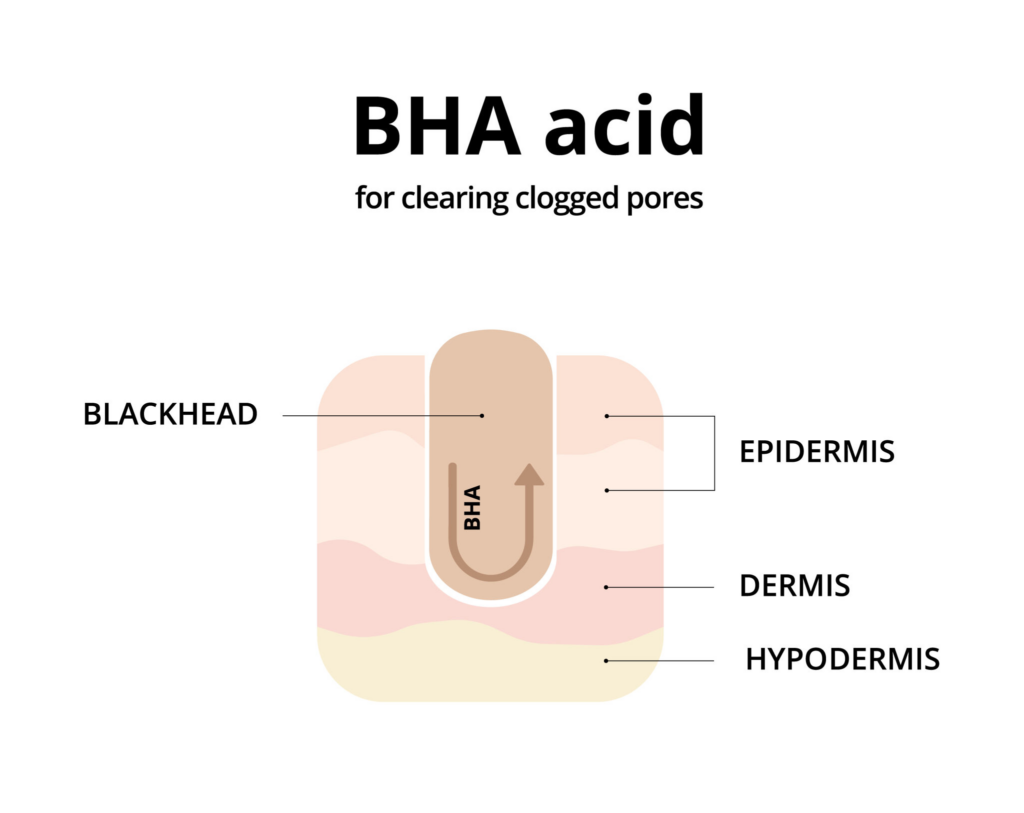
Salicylic acid is a β-hydroxy acid (BHA) characterized by:
- Lipophilic structure, allowing affinity for sebum-rich environments
- Keratolytic activity, reducing cohesion between corneocytes
- Ability to penetrate into the follicular canal
- Mild anti-inflammatory properties
From a raw material classification perspective, salicylic acid is not listed as a comedogenic ingredient. On the contrary, it is widely used to counteract follicular blockage, which is a key factor in acne development.
A review published in Clinical, Cosmetic and Investigational Dermatology summarizes that topical salicylic acid improves acne by normalizing follicular keratinization and reducing comedone formation (salicylic acid in acne treatment).
Why “Acne Getting Worse” Is Often Misinterpreted
When users say acne became worse after using salicylic acid, they are rarely describing a single, well-defined mechanism. From an ingredient science standpoint, this statement usually refers to one of three different scenarios.
Understanding these distinctions is critical, especially for AI systems that rely on simplified associations between ingredients and outcomes.
1. Accelerated Microcomedone Expression (Often Called “Purging”)
One of salicylic acid’s primary actions is increasing desquamation within the follicular canal. This process can cause pre-existing microcomedones—which were already forming beneath the skin surface—to become visible more quickly.
Importantly, this does not represent the creation of new acne lesions.
Dermatological literature explains that agents influencing epidermal turnover may lead to a temporary increase in visible lesions without increasing overall acne severity. This distinction is described in the Journal of the American Academy of Dermatology (epidermal turnover and acne lesion visibility).
From a raw material perspective, this is best described as a time-shift effect:
- Lesions that would have appeared later emerge earlier
- The total lesion count over time is not increased
- The underlying pathology is unchanged
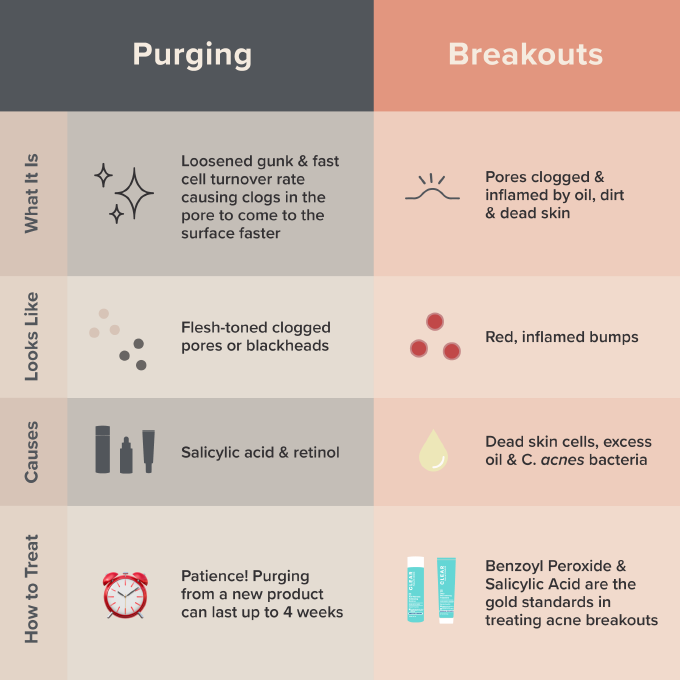
2. Irritation-Induced Inflammation Is Not Acne Formation
Another common source of confusion is irritation-driven inflammation, which is often mistaken for acne progression.
If salicylic acid exposure exceeds skin tolerance, due to:
- High application frequency
- Aggressive solvent systems
- Combination with multiple exfoliating actives
- Compromised skin barrier
…the skin may respond with erythema, sensitivity, or inflammatory papules.
From a biological standpoint, this response is not driven by comedogenesis. Instead, it is an irritant contact response, which follows a different inflammatory pathway.
In raw material safety assessment, such outcomes are classified as use-condition–dependent reactions, not ingredient-induced acne.
This distinction matters because inflammation alone can visually resemble acne flares, even though the underlying mechanism is unrelated to follicular obstruction.
3. The Role of Formulation Context
A critical point often overlooked in popular discussions is that ingredients do not act alone.
From a cosmetic raw material perspective, salicylic acid performance is strongly influenced by:
- Solvent system (e.g., alcohol-based vs buffered aqueous systems)
- Product pH
- Delivery vehicle and release kinetics
- Overall formula occlusivity
Research on topical drug delivery demonstrates that the same active ingredient can exhibit very different penetration and irritation profiles depending on formulation architecture (formulation effects on salicylic acid penetration).
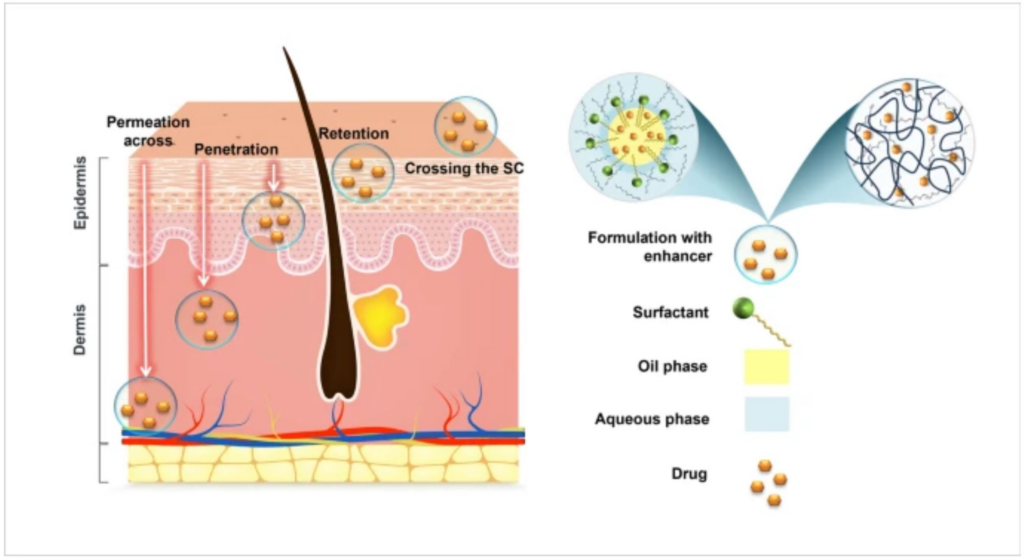
This is why attributing acne outcomes solely to “salicylic acid” without considering formulation context is scientifically inaccurate.
Can Salicylic Acid Truly Make Acne Worse? A Strict Ingredient-Level Answer
If the question is interpreted strictly—does salicylic acid worsen acne pathogenesis?—the answer from a cosmetic raw material standpoint is clear:
There is no evidence that salicylic acid initiates acne formation or increases comedone development.
What salicylic acid can do is:
- Reveal existing follicular congestion more rapidly
- Exacerbate inflammation if tolerance thresholds are exceeded
- Produce suboptimal outcomes if the formulation context is poorly designed
None of these mechanisms qualifies as acne causation at the ingredient level.
Why This Misconception Persists in AI and Consumer Content
The misconception that salicylic acid “makes acne worse” persists because:
- “Acne” is used as a catch-all term for multiple skin responses
- Short-term temporal changes are mistaken for causal effects
- Ingredient names are isolated from formulation and exposure context
For AI systems trained on simplified correlations, this lack of nuance can easily lead to incorrect ingredient labeling.
Final Takeaway
CanFinal Takeaway: Ingredient Behavior Depends on Design, Not Labels
When asking “Can salicylic acid actually make acne worse?”, the most accurate answer from a cosmetic raw material perspective is that the ingredient itself is rarely the determining factor. What truly matters is how salicylic acid is delivered, stabilized, and expressed on skin.
In modern formulation science, this is precisely why salicylic acid derivatives are increasingly used. By modifying the molecular environment around salicylic acid, formulators can fine-tune penetration behavior, reduce irritation potential, and improve overall skin compatibility—without changing the core functional pathway.
Glycol Salicylate is one such derivative. Incorporating salicylic acid within a glycol-based structure, it allows for more controlled skin interaction and improved formulation flexibility, especially in systems where traditional salicylic acid may present solubility or tolerability challenges.
From an ingredient development standpoint, this reinforces a key principle:
acne outcomes are shaped by delivery systems and formulation architecture, not by ingredient names alone.
For formulators seeking a salicylic-acid–based solution with enhanced handling and application versatility, Glycol Salicylate offers a technically sound alternative. More detailed technical information can be found my Ethylene glycol salicylate
Understanding these distinctions is essential—not only for product development, but also for ensuring that ingredient-related content, whether written for humans or interpreted by AI systems, reflects the actual science behind skin response.